


The Norwegian aquaculture industry is subject to a comprehensive set of regulations governing the environment, fish welfare, and documentation. These requirements come from various sources: government agencies, certification schemes, and the farmers’ own internal procedures.
Although the requirements vary in terms of detail, they have one thing in common: the need for reliable, accessible, and verifiable environmental data. For fish farmers, this is not just about meeting formal requirements. Effective environmental monitoring is also an important tool for safe operations, better decision-making, and good fish welfare.
Environmental requirements in aquaculture can be both specific and performance-based. Some regulations specify exactly what must be measured, while others place greater responsibility on the aquaculturist to document that conditions at the site are acceptable.
An example of a specific requirement can be found in the Regulations on the Control of Sea Lice in Aquaculture Facilities (the Sea Lice Regulations). Among other things, these regulations require the measurement and recording of sea temperature at a depth of 3 meters, as well as the recording and storage of salinity data. This is one of the few sets of regulations that specifies a specific measurement depth. Temperature data is used, among other things, in the assessment of measures and the frequency of lice counts.
In addition, many fish farmers are certified under various standards that require documented monitoring of environmental conditions, such as oxygen, temperature, salinity, and turbidity. The requirements in such standards are often risk-based. This means that the measurements must be representative of the conditions in which the fish actually live, and that the data must be available for presentation during an audit.
“Fish farmers have to go through a large number of audits every single year. We want to make it easier for our customers to actually find the data they need, so they can avoid non-conformities and have smoother audits,” says Mari Huber, Quality Manager at Seaqloud.

In practice, it is often the farmers’ own internal procedures that set the most detailed requirements. Internal procedures for fish welfare, emergency preparedness, operations, and continuous improvement may go beyond both regulatory and certification requirements.
This could include, for example, more frequent measurements, monitoring at multiple depths in the water column, longer historical data, improved traceability, and alerts in the event of deviations. Such requirements are important because they support day-to-day operations. They enable better risk management, more precise decision support, and a clearer basis for taking early action if environmental conditions change.
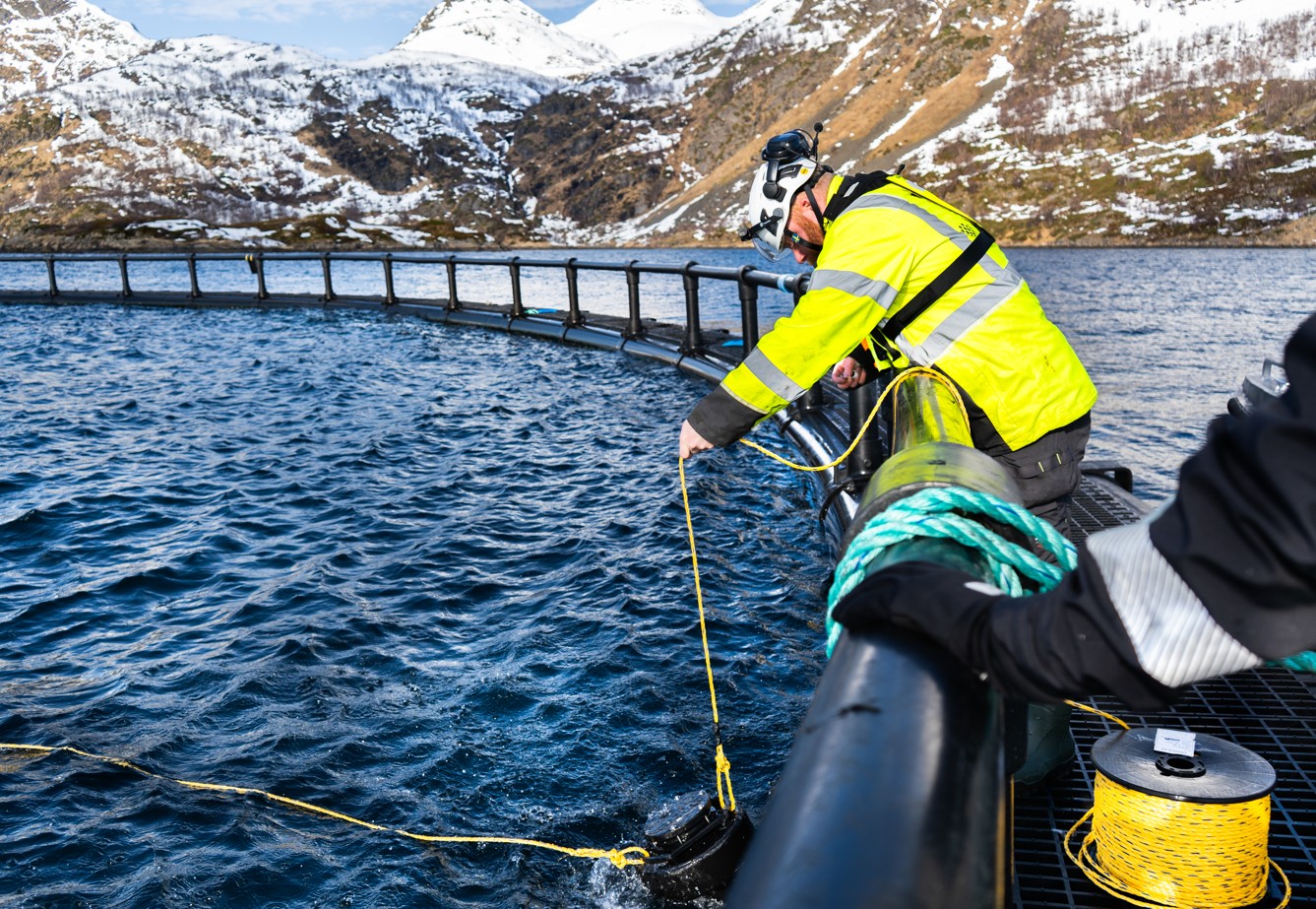
Seaqloud helps fish farmers with continuous, automated environmental monitoring tailored to both external requirements and internal needs. With Seaqloud, fish farmers can log key environmental parameters such as oxygen saturation, temperature, salinity, and ocean currents. Measurements can be configured at depths relevant to each specific site and to the actual conditions the fish are exposed to.
"In an industry with increasing demands for documentation and sustainability, the quality and availability of data are absolutely crucial. Seaqloud aims to be a partner that ensures fish farmers have the insights they need to meet both today’s and tomorrow’s requirements," explains Niklas Aabel, Commercial Director at Seaqloud.
The data is available in the customer's dashboard with the latest values updated in real time. At the same time, historical data series are stored and can be used for audits, analyses, internal documentation, and reporting to regulatory authorities.
Seaqloud can also be configured to send alerts based on defined threshold values. This ensures that operations personnel are notified if environmental conditions approach or exceed established limits. In this way, environmental data becomes not just documentation, but an active tool in day-to-day operations. Data collected in Seaqloud can also be easily transferred to other systems to create value-added services, such as Mercatus Farmer and Akva Fishtalk.
Effective environmental monitoring is not just about “keeping the numbers in order.” When data is collected systematically and continuously, it provides greater value than mere documentation. This leads to a better basis for decision-making in day-to-day operations, earlier detection of undesirable conditions, improved fish welfare, and simpler audits. At the same time, it becomes easier to document that the site is being monitored in a professionally sound manner.
Seaqloud brings together environmental data, documentation, and operational insights into a single solution. The result is greater efficiency in day-to-day operations for fish farmers, better compliance with regulations, and a stronger foundation for safe and sustainable operations.

